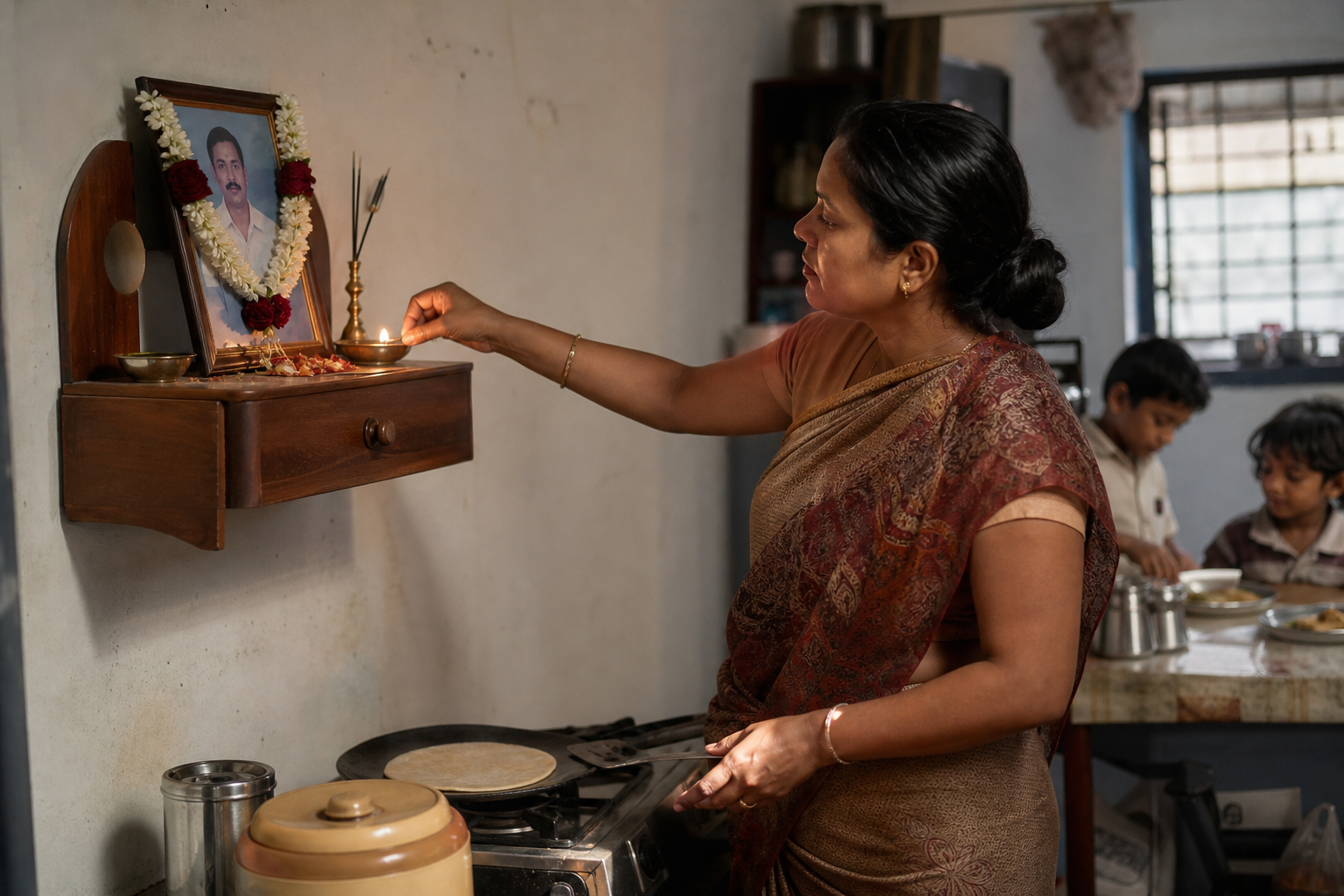
Grief researchers describe a dual process: times oriented toward loss, and times oriented toward restoring daily life. In theory that sounds balanced. In an Indian household it often looks like lighting a lamp and cooking breakfast in the same hour, tears at a photograph, then answering the door for the milk vendor.
Neither moment cancels the other. Both belong to the long work of living after loss.
Loss-oriented and restoration-oriented days
Loss-oriented days might mean anniversaries, empty chairs at festivals, or paperwork that forces you to write a name you wish you did not have to write in the past tense. Restoration-oriented days might mean returning to work, arranging a child's school fees, or laughing at something small and feeling guilty afterward.
Permission to oscillate is permission to be human. You are not required to choose one mode forever.
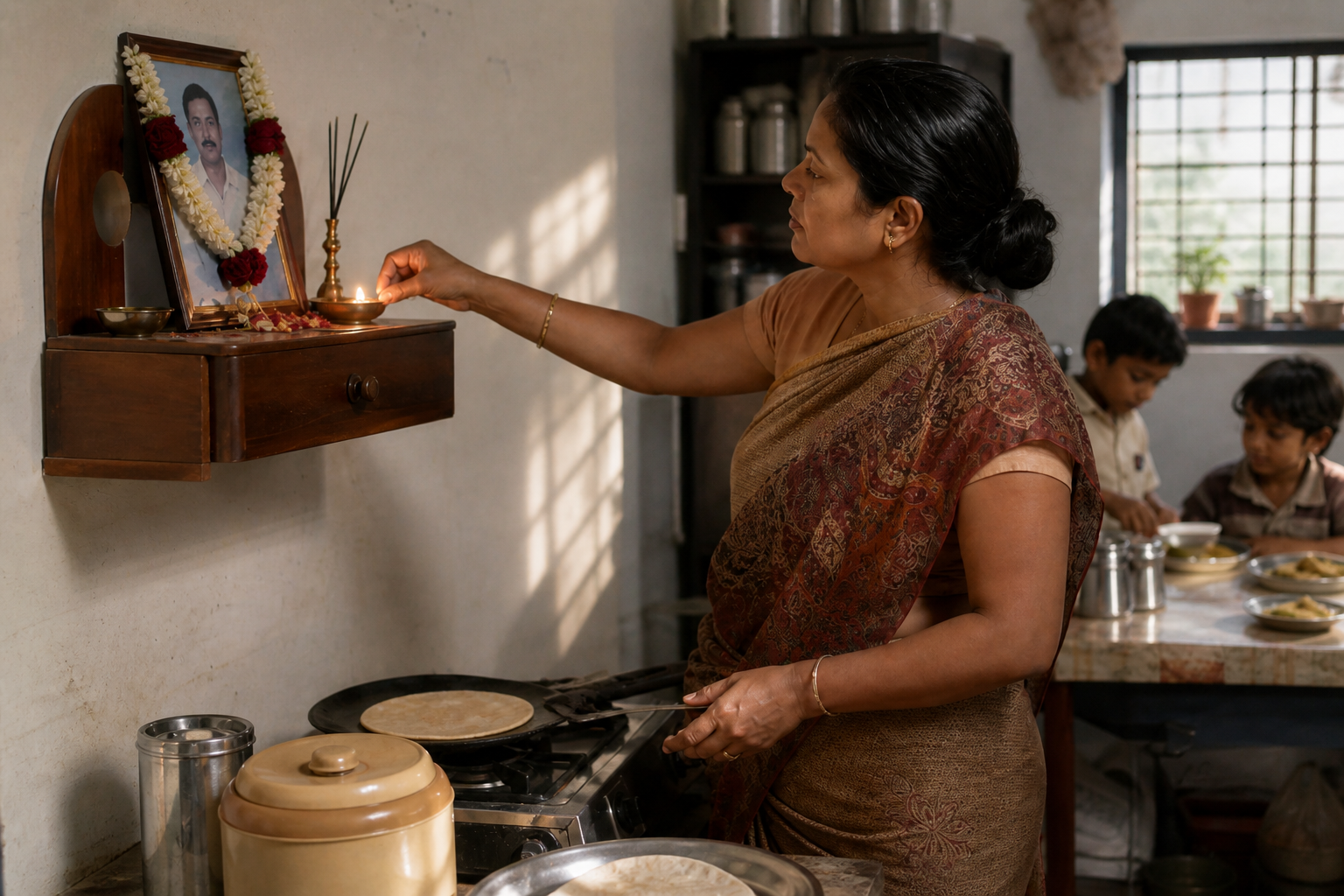
“You can light a lamp for someone who is gone and still pack a lunch for someone who is here. Both are love.”
Why rushing either side causes harm
Families under pressure to "get back to normal" may skip the loss-oriented work, and find grief returning as sleeplessness or unexplained anger. Families who feel they must mourn constantly may skip restoration, and find life narrowing until there is room for nothing but pain.
GiVa support aims to walk with both: space to remember, and practical help so daily life does not collapse while you do.
