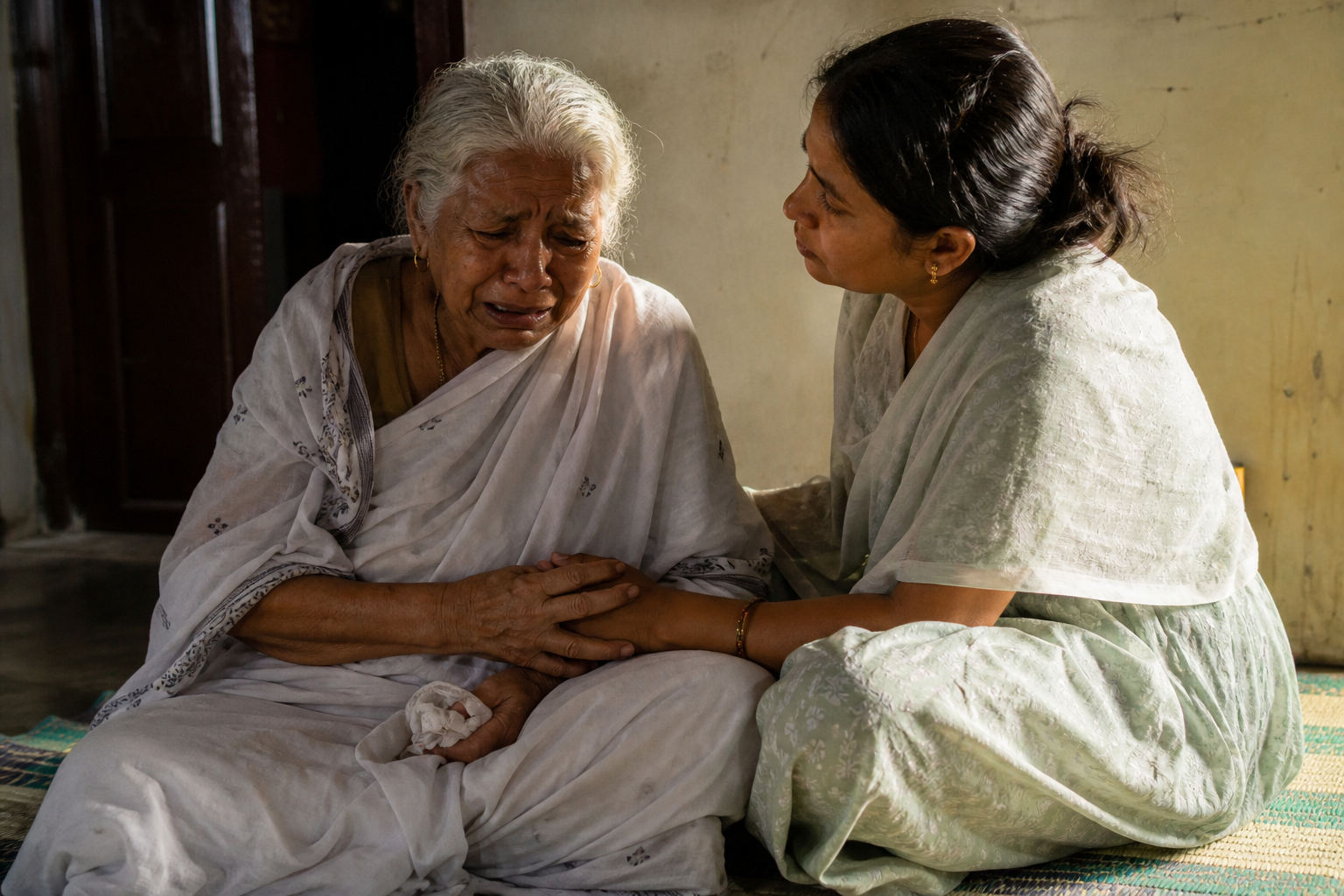
Connection with someone who has died does not have to become a chain of pain. Remembering, talking about, and honouring those we love can sit alongside rebuilding daily life. The question is not whether we stay connected, but how.
For many bereaved people, the fear is that remembering means refusing to heal. In practice, a living bond can soften isolation. It can keep dignity intact. It can help a family tell the truth about who was loved and why that love still shapes the home.
When connection helps
Healthy continuing bonds often look ordinary: telling stories at the dinner table, keeping a meaningful tradition on festivals, visiting a place that mattered, or living out values the person stood for. Saying a name without lowering your voice, as if love were something to hide.
These practices do not freeze people in the past. They create a bridge. For children especially, honest remembrance can protect against silence that confuses more than it comforts.

“A continuing bond is not a refusal to heal. It can be the shape healing takes.”
When connection hurts
Bonds become heavy when guilt, unfinished conflict, or pressure to "stay stuck" blocks rest and relationship with the living. Sometimes people feel they must suffer forever to prove loyalty. Sometimes a family demands one approved way to mourn and shames every other way.
Support then means gently untying what binds, without asking anyone to forget. NiVan's listening spaces are built for this honest sorting: what to keep close, what to set down for a while, and what help you need for both.
Related book: Continuing Bonds: New Understandings of Grief
